

Vitamin B12 Benefits: What It Does and Why You Need It
Vitamin B12 sits behind two reactions that every cell in your body depends on: building DNA and producing energy from food. Those two jobs alone connect it to your blood, your nerves and your brain, which is why a shortage shows up in so many different ways. Most people eating a mixed diet get enough without thinking about it. A sizeable minority do not, and the gap is wider than the textbook picture of strict vegans and elderly patients suggests.
This article covers what vitamin B12 does, the benefits that have human evidence behind them, who is most likely to run low, how much you need, and which foods supply it.
What is vitamin B12?
Vitamin B12, also called cobalamin, is a water-soluble vitamin that your body cannot make. It has to come from food or supplements. The name "cobalamin" comes from the cobalt atom at the centre of the molecule, and the vitamin exists in several forms: methylcobalamin and adenosylcobalamin are the two that work inside cells, while cyanocobalamin is the synthetic form used in most supplements and fortified foods.
Absorbing B12 from food is more involved than absorbing most other vitamins. Stomach acid first separates the vitamin from the protein it is bound to, then a protein made by the stomach lining called intrinsic factor picks it up and carries it to the lower small intestine, where it crosses into the blood. Anything that reduces stomach acid or damages the stomach lining can interrupt this chain, which is why absorption problems become more common with age.
What does vitamin B12 do in your body?
B12 serves as a cofactor for exactly two enzymes, and between them they reach into nearly every tissue. The Linus Pauling Institute at Oregon State University documents both reactions in detail.
Methionine synthase converts homocysteine into methionine, using B12 and folate together. Methionine then feeds into the methylation cycle, which supplies the methyl groups that cells use to regulate DNA, produce neurotransmitters and build myelin, the insulation around nerve fibres. When B12 runs low, this reaction stalls, homocysteine builds up in the blood, and methylation slows.
Methylmalonyl-CoA mutase converts methylmalonyl-CoA into succinyl-CoA, which enters the citric acid cycle in the mitochondria. This is how certain fats and amino acids are broken down for energy. When B12 is missing, methylmalonic acid accumulates instead, and the mitochondrial energy supply from those fuel sources is reduced.
Two enzymes, two consequences when they fail: rising homocysteine (a marker linked to cardiovascular and neurological risk) and rising methylmalonic acid (a marker of impaired energy metabolism). Both are measurable in blood tests and both are used clinically to confirm B12 deficiency.
How does vitamin B12 support brain function?
The nervous system is especially sensitive to B12 status, for reasons that trace back to the two reactions above.
First, myelin depends on methylation. The insulating sheath around nerve fibres is built and maintained through methylation reactions that require B12. A 2013 review in the New England Journal of Medicine by Stabler describes how prolonged B12 deficiency causes demyelination in the spinal cord and peripheral nerves, producing the pattern called subacute combined degeneration: numbness, tingling, impaired balance and, if untreated, difficulty walking.
Second, neurotransmitter production links back to the methylation cycle. The pathway that produces S-adenosylmethionine, the body's main methyl donor, depends on B12 through methionine synthase. S-adenosylmethionine is involved in the synthesis of serotonin and dopamine, which is why mood and cognitive changes can appear early in deficiency. We covered the dopamine side of this pathway in our article on how to increase dopamine.
Third, homocysteine itself may be directly harmful to neurons. The VITACOG trial, a randomised controlled trial of 271 adults over 70 with mild cognitive impairment, found that B vitamins (folic acid, vitamin B12 at 0.5 mg/d, and vitamin B6) slowed the rate of brain atrophy by about 30% over two years compared with placebo. The treated group lost brain volume at 0.76% per year against 1.08% in the placebo group (P = 0.001). The effect was strongest in participants who started with high homocysteine: those above 13 µmol/L saw a 53% slower rate of shrinkage.
A necessary qualification: a 2021 meta-analysis in Nutrients by Markun and colleagues pooled 16 randomised controlled trials covering 6,276 participants and found no meaningful effect of B12 supplementation on cognitive function or depression in people without advanced neurological disorders. The pattern that emerges is the same one we saw with vitamin B6: B vitamins seem to matter most when homocysteine is already elevated, and they worked as a combination, so B12 cannot claim the credit alone.
Can vitamin B12 help with energy?
The short answer is that it can relieve the fatigue caused by its own deficiency, and it cannot do much beyond that.
B12 is needed for the methylmalonyl-CoA mutase reaction that feeds certain fuels into the mitochondria. When B12 drops, this pathway backs up, methylmalonic acid rises, and energy production from those substrates falls. The result is a tiredness that patients describe as deep and persistent, different from ordinary sleepiness. Restoring B12 levels can resolve it, sometimes within weeks.
Outside of deficiency, the evidence is thin. The Markun 2021 meta-analysis looked for an effect on fatigue and found only one trial that measured it directly, which was not enough data to draw any conclusion. B12 does not act as a stimulant; it is a cofactor. If the cofactor is already present in adequate amounts, adding more does not speed up the reaction.
Who is most likely to be low in vitamin B12?
Deficiency is not just a textbook curiosity. The Linus Pauling Institute notes that 10–30% of people over 60 have atrophic gastritis, a thinning of the stomach lining that reduces acid production and with it the ability to free B12 from food. About 2–3% of people over 65 have pernicious anaemia, where the immune system attacks the cells that make intrinsic factor.
Several other groups carry higher risk:
People on plant-based diets. B12 occurs naturally only in animal-derived foods. A 2014 review in the European Journal of Clinical Nutrition found deficiency rates of 11–90% in vegetarian subgroups, with higher rates in vegans than in lacto-ovo vegetarians, and the highest rates in those who did not supplement.
People taking certain medications. Metformin, a common diabetes drug, reduces B12 absorption over time. Proton pump inhibitors and H2 blockers, which suppress stomach acid, do the same by removing the acid step that frees B12 from food protein.
People with gastrointestinal conditions. Coeliac disease, Crohn's disease and any surgery that removes or bypasses the lower ileum (where B12 is absorbed) can cause deficiency regardless of intake.
Pregnant and breastfeeding women. B12 requirements rise during pregnancy and lactation, and maternal deficiency can affect the infant's nervous system development.
What are the signs of vitamin B12 deficiency?
The symptoms fall into three groups, and they do not always arrive together.
Blood: The most recognised sign is megaloblastic anaemia, where red blood cells grow abnormally large and cannot carry oxygen properly. Fatigue, weakness, pale skin and shortness of breath follow.
Nerves: Tingling or numbness in the hands and feet, difficulty with balance, and muscle weakness. Stabler's 2013 NEJM review notes that neurological symptoms can appear before the anaemia does, which means a normal blood count does not rule out B12 problems.
Brain: Memory difficulty, trouble concentrating, irritability and low mood. In severe cases, particularly in elderly patients, the picture can look like dementia.
The overlap with other conditions is part of the problem. Fatigue and low mood have a long list of causes, and B12 deficiency sits quietly among them. A blood test measuring serum B12, and if borderline, methylmalonic acid and homocysteine levels, is the standard way to confirm it.
How much vitamin B12 do you need per day?
The recommended dietary allowance set by the US Food and Nutrition Board:
| Group | RDA per day |
|---|---|
| Adults 19 and older | 2.4 µg |
| Pregnancy | 2.6 µg |
| Breastfeeding | 2.8 µg |
| Children 9 to 13 | 1.8 µg |
| Children 4 to 8 | 1.2 µg |
| Children 1 to 3 | 0.9 µg |
The RDA looks small because the body recycles B12 through a loop between the liver and the gut, so daily losses are low. However, the absorption rate from a single oral dose drops steeply as the dose rises: the intrinsic factor pathway can only carry about 1.5 µg at a time. Larger supplemental doses still deliver some B12 through passive diffusion, but only about 1% of the dose.
No tolerable upper intake level has been set for B12 because toxicity has not been observed even at high doses. That said, the absence of a formal upper limit is not an invitation to take extreme amounts; it simply reflects that no harm has been documented.
Adults over 50 are specifically advised by the Food and Nutrition Board to get their B12 from fortified foods or supplements, because the crystalline form does not require stomach acid for absorption.
What are the best food sources of vitamin B12?
B12 occurs naturally only in animal-derived foods. Clams are the richest common source by a wide margin. Measured servings, from the Linus Pauling Institute's food table:
| Food | Serving | Vitamin B12 |
|---|---|---|
| Clams, cooked | 3 oz | 84.1 µg |
| Mussels, cooked | 3 oz | 20.4 µg |
| Mackerel, cooked | 3 oz | 16.2 µg |
| Beef, cooked | 3 oz | 7.0 µg |
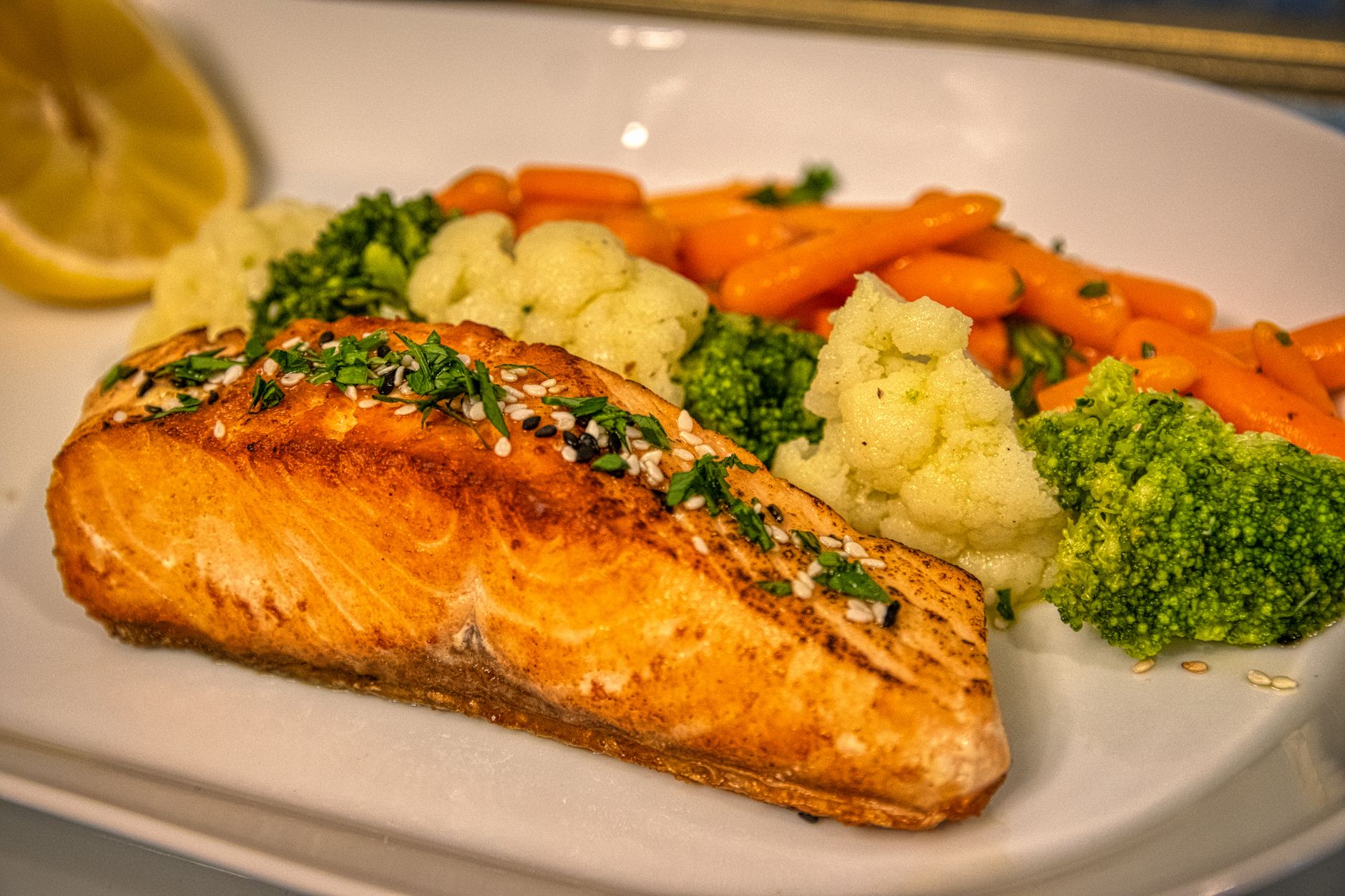
| Salmon, cooked | 3 oz | 2.4 µg |
| Milk, 2% | 8 fl oz | 1.3 µg |
| Egg, whole | 1 large | 0.6 µg |
A single serving of beef or salmon covers the daily target. Most people eating animal products regularly have no trouble reaching 2.4 µg.
For people who eat no animal products, fortified foods fill the gap. Fortified plant milks, breakfast cereals and nutritional yeast are the most accessible sources, but the B12 content varies by brand, so checking the label matters. A supplement is the simplest insurance for anyone on a strict plant-based diet.
Should you take a vitamin B12 supplement?
If you eat meat, fish, eggs or dairy regularly, you almost certainly do not need one. A supplement makes sense in the situations listed above: age over 50, plant-based diets, medications that reduce stomach acid, and conditions that impair absorption.
The dose worth wanting is modest. The body absorbs only a few micrograms at a time through the intrinsic factor pathway, so a supplement in the range of 25–100 µg daily, or 1,000 µg a few times per week, covers the realistic gap. Cyanocobalamin is the most studied form and the cheapest; methylcobalamin is marketed as a "natural" alternative, but in practice both raise serum B12 and both require conversion steps inside cells.
Vitamin B12 does its best work alongside its metabolic partners. Folate and vitamin B6 feed into the same homocysteine-clearing pathway, and the VITACOG trial that slowed brain atrophy used all three. We covered the vitamin B6 side in our vitamin B6 benefits article: the enzyme that converts L-tyrosine into dopamine depends on B6, while the methylation cycle that supports the same neurotransmitter pathway depends on B12. Our own formula pairs both vitamins with the substrates they process; the reasoning is on the research and formulation page, and our guide to the best nootropic supplement explains how a formula weighs cofactors like B12 against the ingredients they support.
The practical summary: eat the foods that supply B12 naturally, supplement if your situation calls for it, and keep the dose sensible. The evidence protects against the problems of running low. It does not promise anything extra from running high.
Frequently asked questions
Is it safe to take vitamin B12 every day?
Yes. Vitamin B12 is water soluble, and the body passes out what it does not need. The NIH has not set an upper tolerable intake level because toxicity has not been observed, even at doses of 2 mg per day in trials. For most people, the 2.4 µg RDA from food or a modest supplement is more than enough.
What happens when your vitamin B12 is low?
The first signs are often tiredness and a general feeling of weakness, because B12 is needed to make healthy red blood cells. Over time, low B12 can cause tingling or numbness in the hands and feet, trouble with balance, memory problems and mood changes. A simple blood test can confirm whether levels are low, and treatment usually reverses the symptoms if it starts early.
Can you get enough vitamin B12 on a plant-based diet?
Not from whole plant foods alone. B12 occurs naturally only in animal products and certain fermented foods. Vegans and strict vegetarians need a reliable source, either fortified foods such as plant milks and nutritional yeast eaten daily, or a B12 supplement. A 2014 review in the European Journal of Clinical Nutrition found deficiency rates as high as 86% in some vegetarian subgroups who did not supplement.
Does vitamin B12 give you energy?
Not the way caffeine does. B12 helps enzymes in the mitochondria produce energy from food, so if your levels are low, restoring them can relieve the fatigue that comes with deficiency. If your B12 status is already normal, extra B12 will not make you feel more energetic. The tiredness that responds to B12 is the tiredness caused by its absence.
Should you take B12 with other B vitamins?
There is a practical reason to pair them. Vitamin B12, vitamin B6 and folate work in the same pathway that clears homocysteine from the blood. The VITACOG trial that slowed brain atrophy in older adults used all three together. Most B-complex supplements and many nootropic formulas combine them for that reason.
Try Vyvamind
Vyvamind combines citicoline, caffeine + L-theanine, tyrosine, and B-vitamins into a single fast-acting focus formula.
Checkout on Amazon · Prime shipping
These statements have not been evaluated by the Food and Drug Administration. This product is not intended to diagnose, treat, cure, or prevent any disease. This article is for informational purposes only and is not medical advice. Consult a qualified healthcare provider before starting any supplement.